The Executive Protection Role : India Story
The Role of Executive Protection
Introduction
Executive Protection (EP) is a highly specialized function within the security industry, designed to ensure the safety and well-being of high-profile individuals, such as executives and leaders, during their travel, events, and daily activities. Unlike traditional security roles, EP requires strategic planning, cultural adaptability, and seamless coordination with diverse stakeholders. During my tenure at Walmart, I had the privilege of handling this critical responsibility, where I navigated challenges that provided invaluable lessons about the art and science of EP. This article aims to share practical insights and approaches tailored to the Indian context, helping security professionals refine their EP strategies and execution.
Understanding Executive Protection
What is Executive Protection?
Executive Protection (EP) involves safeguarding high-profile individuals, such as executives, from threats like physical harm, harassment, or reputational risks. It ensures business continuity by minimizing vulnerabilities during travel, events, or daily activities. EP is crucial for organizations as it protects leadership, preserves critical decision-making capabilities, and upholds corporate reputation and security.
Key Elements of EP Include:
- Threat Assessment and Mitigation: Identifying potential threats and implementing countermeasures.
- Strategic Travel Planning: Ensuring secure and efficient travel routes and schedules.
- Collaboration with Local Authorities: Working closely with law enforcement and local agencies.
- Emergency Response Readiness: Preparing for medical or security emergencies.
Operating as an EP Officer in India
The Indian environment presents unique challenges for EP professionals, including crowded settings, diverse cultural norms, and complex bureaucratic processes.
EP officers must adopt specific skills and strategies to excel in this context:
- Cultural Sensitivity: Understand and respect local customs to build trust and avoid unintentional offenses.
- Traffic Management Expertise: Plan and navigate efficiently in cities notorious for traffic congestion.
- Vendor and Stakeholder Management: Ensure quality and timeliness by effectively coordinating with hotels, transportation providers, and local vendors.
- Dynamic Threat Assessment: Stay alert to rapidly changing risks in unpredictable environments. For instance, during Walmart leadership visits to India, we prioritized cultural adaptation, which earned the trust of local stakeholders and ensured the visiting executives’ comfort and security.
Preparation:
The Importance of Reconnaissance Effective EP operations hinge on thorough preparation, with reconnaissance (or "Recci") forming the backbone of this process.
Essential Reconnaissance Steps:
- Pre-Visit Surveys: Physically inspect venues, travel routes, and accommodations.
- Risk Assessment: Identify vulnerabilities, such as high-crime areas or infrastructure weaknesses.
- Logistics Planning: Develop transportation plans, emergency evacuation routes, and fallback options. Ensure multiple routes (2-3) are prepared, detailing law enforcement agency contacts, hospitals, clinics, and other public safety resources.
- Communication Protocols: Establish clear and reliable communication channels among team members and stakeholders. For example, ahead of a critical leadership visit, we conducted extensive reconnaissance, including alternate route planning, to ensure minimal delays and maximum safety despite potential traffic disruptions.
The Role of Law Enforcement in Executive Protection
Collaboration with law enforcement is a cornerstone of successful EP operations. Law enforcement provides local intelligence, crowd control, and rapid response capabilities, complementing an EP team’s efforts.
Best Practices for Collaboration with Law Enforcement:
- Early Engagement: Initiate contact with local police well in advance of events.
- Information Sharing: Share detailed itineraries and risk assessments to aid police planning.
- Joint Drills: Conduct mock drills with law enforcement to ensure preparedness for emergencies. During one Walmart visit, we partnered with local police to secure a high-profile event. Sometimes your continuous efforts in law enforcement really works and this time my ability to build trust and rapport with enforcement officers demonstrated the importance of fostering effective partnerships for seamless execution.
Conclusion:
Key Lessons and Recommendations
My experiences in Executive Protection, particularly during my time at Walmart, have taught me that success in this field demands a blend of meticulous planning, adaptability, and interpersonal skills. Collaborating with seasoned US professionals emphasized the importance of cultural awareness, stakeholder collaboration, and continuous learning.
Recommendations for Aspiring EP Professionals:
- Cultivate a keen eye for detail and robust risk management skills.
- Build strong relationships with law enforcement and local stakeholders.
- Continuously upskill in areas such as first aid, defensive driving, and technological tools.
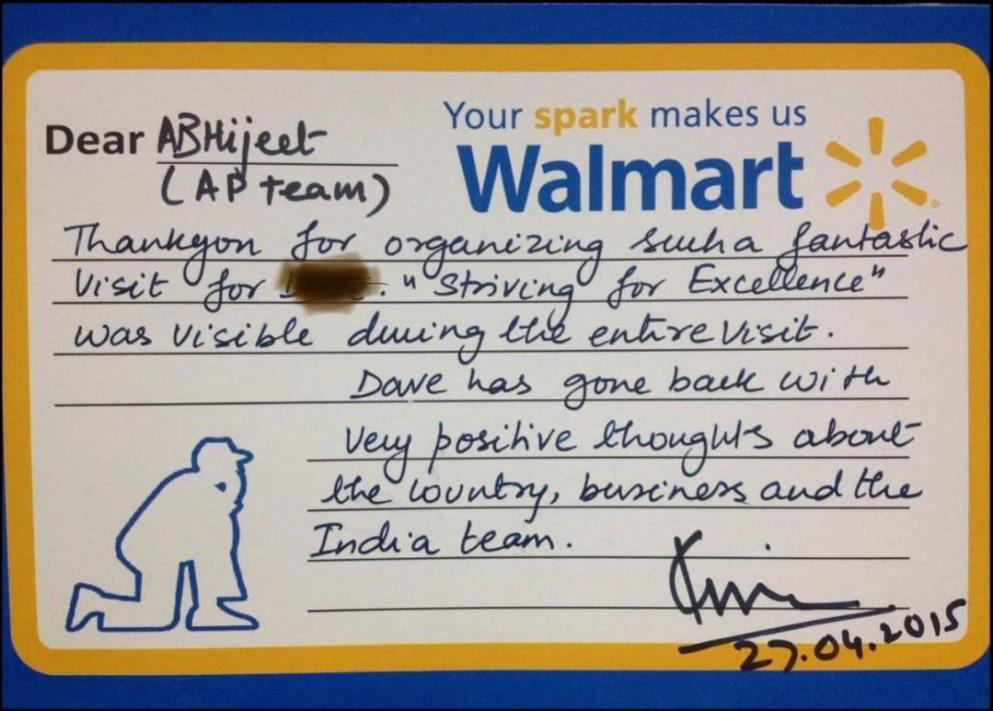
By adhering to these principles, EP officers can set new benchmarks for professionalism and excellence in the security domain. I still cherish the moments spent in Executive Protection roles, where the pride of being recognized by the organization resonates deeply. With a quiet sense of accomplishment, we, as EPs, continue to move forward, dedicated to safeguarding one of the three critical pillars of business: People, alongside Process and Property.
Recognition:
Article Written By:
Abhijeet Kumar Sinha CPP